


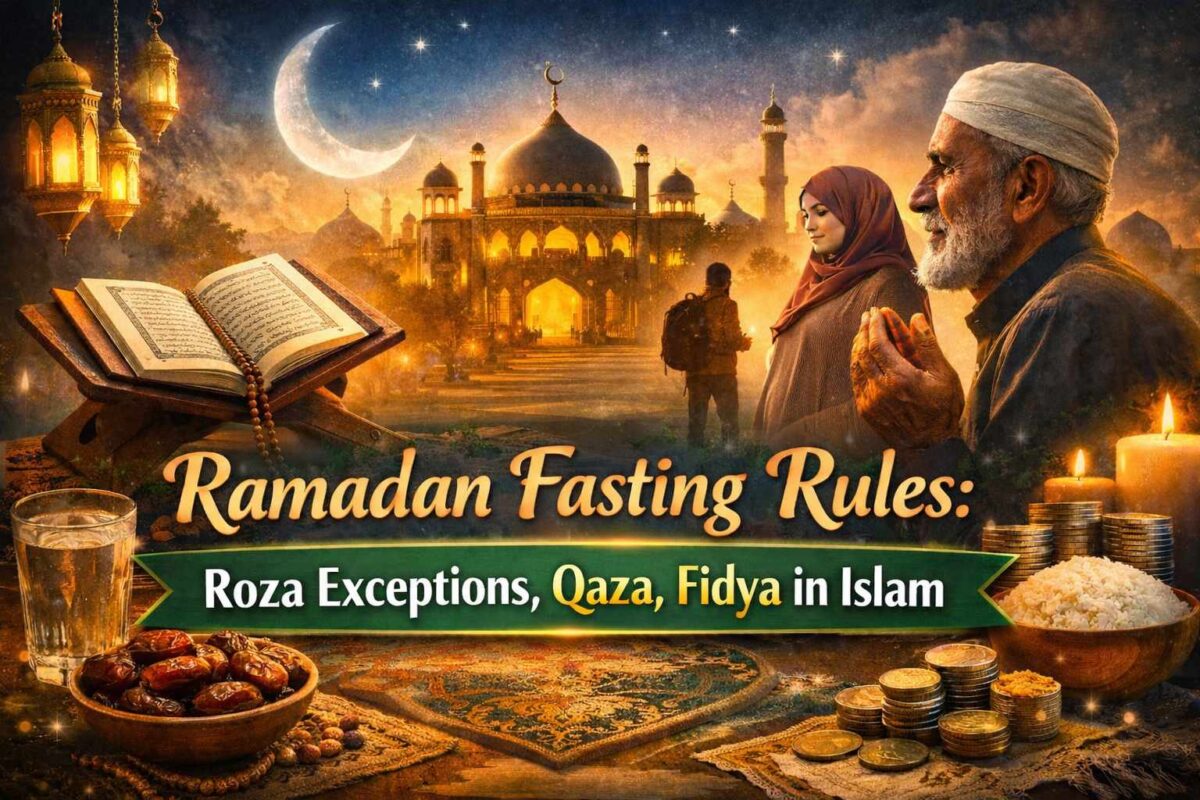
Who Is Exempt from Fasting and What Must Be Done Instead? (Qadāʾ & Fidya)
Introduction
Fasting in the month of Ramadan is one of the five pillars of Islam and a core act of worship that nurtures taqwā (God-consciousness), patience, and self-discipline. While fasting is a great spiritual obligation, Islam is a religion of mercy, balance, and realism. Allah does not burden His servants beyond their capacity.
For this reason, Islamic law clearly outlines exceptions for those who are unable to fast due to legitimate reasons such as illness, travel, pregnancy, or old age. Along with these exemptions, Islam also provides alternative obligations, such as Qadāʾ (making up missed fasts) or Fidya (feeding the poor), ensuring that no believer is deprived of Allah’s reward while also protecting human health and dignity.
This article explores:
-
Who is exempt from fasting
-
Temporary vs permanent exemptions
-
The difference between Qadāʾ and Fidya
-
Evidence from the Qur’an, Hadith, and Tafsīr
The Obligation of Fasting in the Qur’an
Allah says:
“O you who believe! Fasting has been prescribed upon you as it was prescribed upon those before you, so that you may attain taqwā.”
(Surah Al-Baqarah 2:183)
Immediately after commanding fasting, Allah mentions exemptions:
“But whoever among you is ill or on a journey, then an equal number of days are to be made up later.”
(Surah Al-Baqarah 2:184)
This shows that Islam combines obligation with compassion—fasting is mandatory, but not at the cost of harm.
2.1 Who Is Exempt from Fasting? (Legitimate Exceptions)
1. The Sick Person (Temporary or Chronic Illness)
Qur’anic Evidence
“And whoever is ill…” (2:184)
Explanation from Tafsīr
Classical scholars such as Ibn Kathīr explain that illness includes:
-
Any condition where fasting worsens health
-
Delays recovery
-
Causes extreme hardship
Ruling
-
Temporary illness → Fast later (Qadāʾ required)
-
Chronic or incurable illness → No fasting at all (Fidya required)
Allah says:
“Allah intends ease for you and does not intend hardship for you.”
(Surah Al-Baqarah 2:185)
2. The Traveler (Musāfir)
Qur’anic Evidence
“…or on a journey…” (2:184)
Hadith Evidence
The Prophet ﷺ sometimes fasted while traveling and sometimes did not, demonstrating flexibility.
“It is not righteousness to fast while traveling.”
(Sahih al-Bukhari)
Conditions of Travel
-
A legitimate Islamic journey (approx. 48–80 km according to jurists)
-
Travel begins before dawn
Ruling
-
Fasting is permissible but not obligatory
-
Missed fasts must be made up later (Qadāʾ)
3. Pregnant and Breastfeeding Women
Hadith Evidence
The Prophet ﷺ said:
“Allah has relieved the traveler of fasting and half the prayer, and relieved the pregnant and breastfeeding woman of fasting.”
(Sunan Abu Dawood)
Scholarly Explanation
If fasting poses:
-
Harm to the mother
-
Harm to the child
-
Risk to milk supply or fetal development
then fasting may be postponed.
Ruling (Based on Majority Opinion)
-
Qadāʾ required
-
Some scholars add Fidya if fasting is delayed for many years without excuse
4. Elderly People (Old Age)
Qur’anic Evidence
“And upon those who are unable to fast [permanently] is a ransom: feeding a poor person.”
(Surah Al-Baqarah 2:184)
Explanation
Elderly individuals who:
-
Lack physical strength
-
Cannot endure fasting
-
Have no hope of regaining ability
are permanently exempt.
Ruling
-
No Qadāʾ
-
Fidya only (feeding one poor person per missed fast)
5. Mentally Incapacitated Individuals
Hadith Evidence
The Prophet ﷺ said:
“The pen is lifted from three: the sleeping person until he wakes, the child until maturity, and the insane until sanity returns.”
(Sunan Abu Dawood)
Ruling
-
No fasting required
-
No Qadāʾ
-
No Fidya
Islam does not impose obligations without accountability.
6. Children (Before Puberty)
Fasting becomes obligatory only after puberty.
Children may be encouraged gently for training, but:
-
No sin for not fasting
-
No Qadāʾ
-
No Fidya
7. Women During Menstruation or Post-Natal Bleeding
Hadith Evidence
ʿĀ’ishah (RA) said:
“We were commanded to make up the fasts, but not the prayers.”
(Sahih Muslim)
Ruling
-
Fasting during menstruation or post-natal bleeding is haram
-
Missed fasts must be made up later (Qadāʾ)
2.2 What Must Be Done If One Does Not Fast? (Qadāʾ & Fidya)
Islam distinguishes between temporary inability and permanent inability.
QADĀʾ – Making Up Missed Fasts
Who Must Perform Qadāʾ?
-
Sick (temporary)
-
Travelers
-
Pregnant or breastfeeding women
-
Menstruating women
Rules of Qadāʾ
-
One missed fast = one fast later
-
Can be done anytime before next Ramadan
-
Continuous fasting is not required
FIDYA – Feeding the Poor
Who Must Pay Fidya?
-
Chronically ill
-
Elderly with permanent weakness
Amount of Fidya
-
Feeding one poor person per missed fast
-
Equivalent to one full meal
-
May be paid in food or its monetary value
Ibn ʿAbbās (RA) said:
“It is for the old man and old woman who cannot fast—they should feed one poor person for each day.”
Important Distinction: Fidya vs Kaffārah
| Term | When Required |
|---|---|
| Qadāʾ | Missed fast with valid excuse |
| Fidya | Permanent inability |
| Kaffārah | Deliberately breaking a fast without excuse |
Kaffārah involves:
-
Freeing a slave (historical)
-
Or fasting 60 consecutive days
-
Or feeding 60 poor people
Wisdom Behind These Exceptions
Islam recognizes:
-
Human weakness
-
Physical limits
-
Mental well-being
-
Social responsibility
Allah says:
“Allah does not burden a soul beyond its capacity.”
(Surah Al-Baqarah 2:286)
The goal of fasting is spiritual purification, not suffering.
Conclusion
Fasting in Ramadan is a profound act of worship, but Islam never demands harm in the name of devotion. Through Qur’anic guidance and Prophetic wisdom, Allah has provided clear exemptions and just alternatives for those unable to fast.
Whether through Qadāʾ or Fidya, every believer remains connected to the spirit of Ramadan. These rulings reflect the beauty, mercy, and practicality of Islam, ensuring that worship remains a source of elevation—not hardship.
