


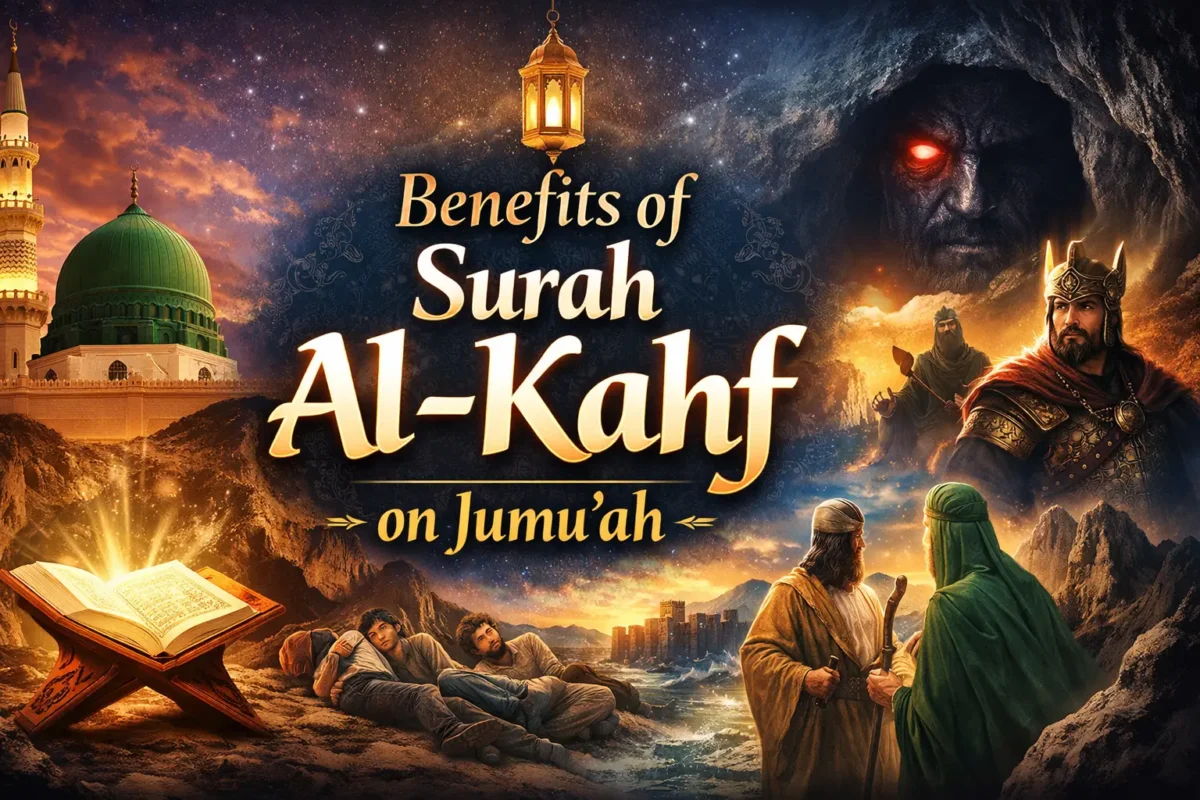
Reciting Surah Al-Kahf on the blessed day of Jumu’ah (Friday) is a beloved Sunnah of the Prophet Muhammad ﷺ. This practice is not only a means of reward but also a source of spiritual light, protection from trials, and deep reflection. Surah Al-Kahf, the 18th chapter of the Qur’an, contains profound lessons through four true historical narratives (waqayāt) that address the major trials of human life.
1. Light (Noor) Between Two Fridays
The Messenger of Allah ﷺ said:
“Whoever recites Surah Al-Kahf on the day of Friday will have a light that will shine for him from one Friday to the next.”
(Sunan al-Bayhaqi, al-Hakim — authenticated by scholars)
This “light” is understood as spiritual guidance, clarity of heart, and protection from misguidance throughout the week. In a world filled with confusion and moral darkness, this weekly illumination becomes a powerful blessing for believers.
2. Protection from the Trial of Dajjal
One of the greatest virtues of Surah Al-Kahf is protection from the fitnah (trial) of Dajjal, the false messiah.
The Prophet ﷺ said:
“Whoever memorizes ten verses from the beginning of Surah Al-Kahf will be protected from Dajjal.”
(Sahih Muslim 809)
Another narration mentions the last ten verses. This indicates the immense spiritual shield contained within this Surah — a protection from the greatest deception humanity will face before the Day of Judgment.
Why Surah Al-Kahf Is So Important
The Four True Stories (Waqayāt) and Their Lessons
Allah ﷻ did not place stories in this Surah randomly. Each narrative addresses a major trial (fitnah) of life, making the Surah especially relevant for every era.
1️⃣ The People of the Cave — Trial of Faith
(Qur’an 18:9-26)
This is the story of young believers who fled persecution to preserve their faith. Allah caused them to sleep in a cave for many years and protected them miraculously.
Lesson:
When faith is threatened, sacrifice and reliance on Allah bring divine help. It teaches courage, tawakkul (trust in Allah), and steadfastness in belief.
2️⃣ The Man of Two Gardens — Trial of Wealth
(Qur’an 18:32-44)
A wealthy man was blessed with two beautiful gardens but became arrogant, denying the Hereafter and attributing success solely to himself. Allah destroyed his gardens as a lesson.
Lesson:
Wealth is a test, not a guarantee of Allah’s pleasure. Gratitude and humility safeguard blessings, while arrogance leads to downfall.
3️⃣ Musa (AS) and Khidr — Trial of Knowledge
(Qur’an 18:60-82)
The journey of Prophet Musa (Moses, AS) with the wise servant Khidr teaches humility in knowledge. Musa (AS) questioned actions that seemed unjust, but later learned the hidden divine wisdom behind them.
Lesson:
Human knowledge is limited. Allah’s wisdom operates beyond what we see. Patience and humility are essential for seekers of knowledge.
4️⃣ Dhul-Qarnayn — Trial of Power
(Qur’an 18:83-98)
The righteous ruler Dhul-Qarnayn was granted immense authority. He traveled the world establishing justice and helping oppressed people, including building a barrier against Gog and Magog (Ya’juj & Ma’juj).
Lesson:
Power is a trust from Allah. True leadership serves humanity and upholds justice, not oppression or ego.
Combined Message of the Four Stories
These four waqayāt collectively address the greatest trials of human existence:
-
Faith — People of the Cave
-
Wealth — Man of Two Gardens
-
Knowledge — Musa & Khidr
-
Power — Dhul-Qarnayn
Reciting Surah Al-Kahf weekly reminds believers how to navigate these tests with righteousness.
Additional Virtue — Forgiveness of Sins
Scholars mention narrations indicating that reciting Surah Al-Kahf on Friday becomes a means of forgiveness for minor sins between the two Fridays, especially when combined with sincere repentance and good deeds.
Conclusion
Surah Al-Kahf is more than a chapter to be recited — it is a weekly spiritual survival guide. It grants light, shields from Dajjal, cleanses sins, and teaches believers how to face life’s greatest trials.
By reciting it every Jumu’ah, Muslims reconnect with timeless truths:
-
Hold firm to faith
-
Stay humble in wealth
-
Seek knowledge with patience
-
Use power with justice
Making Surah Al-Kahf part of your Friday routine is a small act with immense rewards — illuminating both this world and the Hereafter.
