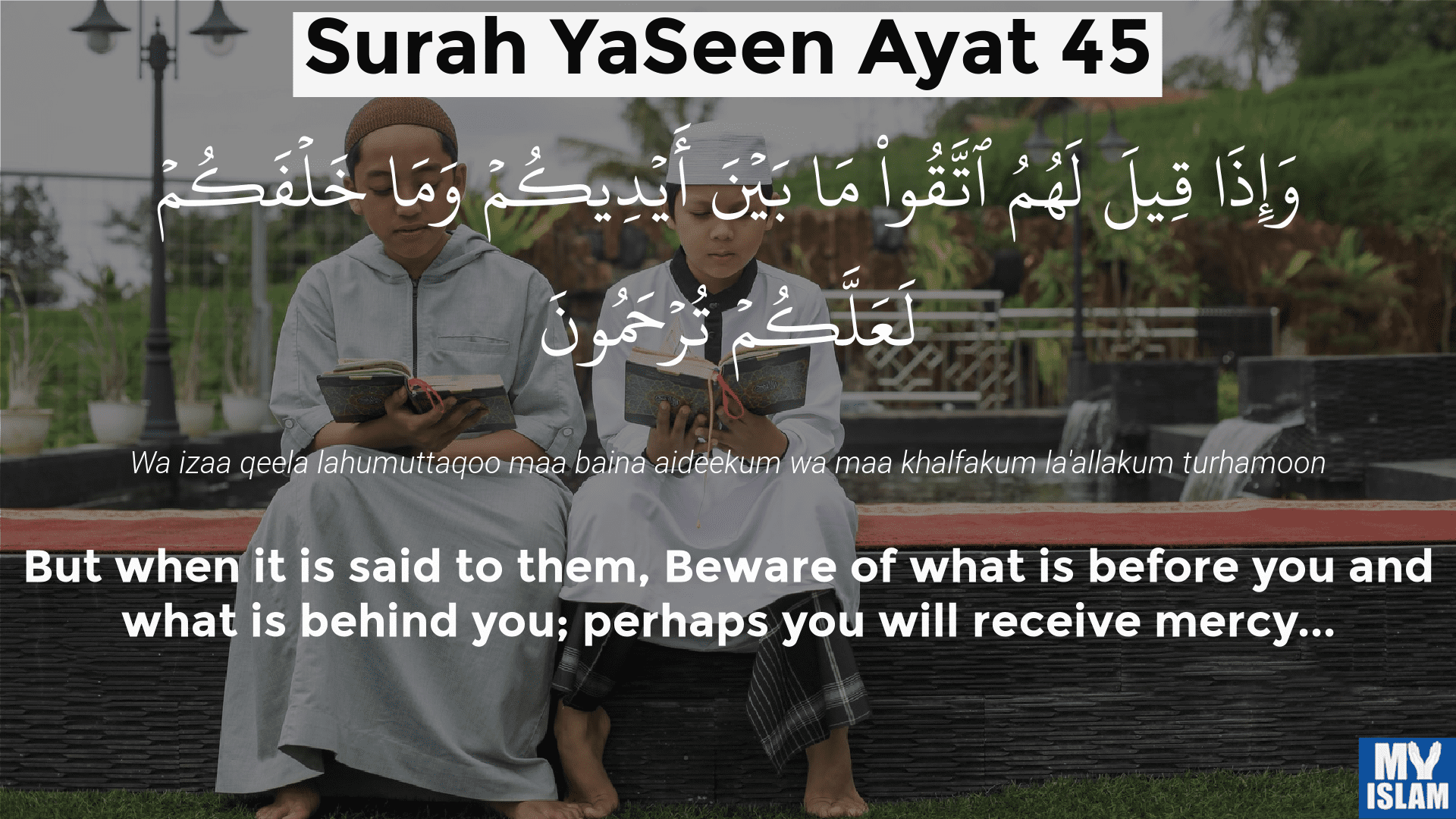



"And when it is said to them: 'Be pious for what is before you and what is to come behind [67] you' that, perhaps you may receive mercy."
This verse highlights a universal warning: When people are advised to fear Allah regarding what has happened before them and what is yet to come, they are being urged to reflect and reform.
"What is before you" may refer to the punishments of past nations (like ‘Ād, Thamūd, and Fir’awn), which serve as historical warnings.
"What is to come behind you" could refer to future punishments—whether in this world, the grave, or the Hereafter.
Alternatively, it could mean:
The past punishments are those in this world,
And the upcoming ones are of the Hereafter.
In both understandings, the purpose is to instill fear of divine justice and encourage people to seek Allah’s mercy by obeying His commands.
45. And when it is said to them: “Beware of that which is before you, and that which is behind you, in order that you may receive mercy.” 46. And never came an Ayah from among the Ayat of their Lord to them, but they did turn away from it. 47. And when it is said to them: “Spend of that with which Allah has provided you,” those who disbelieve say to those who believe: “Shall we feed those whom, if Allah willed, He would have fed You are only in a plain error.”
Allah tells us how the idolators persisted in their misguidance and in not paying attention to the sins that they had committed in the past or what was to happen to them in the future, on the Day of Resurrection.
﴿وَإِذَا قِيلَ لَهُمُ اتَّقُواْ مَا بَيْنَ أَيْدِيكُمْ وَمَا خَلْفَكُمْ﴾
(And when it is said to them: “Fear of that which is before you, and that which is behind you…”) Mujahid said, “This refers to sins.” Others said it is the opposite.
﴿لَعَلَّكُمْ تُرْحَمُونَ﴾
(in order that you may receive mercy.) means, `so that, if you fear such things Allah will have mercy on you and will save you from His punishment.’ The wording implies that they would not respond. Rather that they would turn away and ignore that, as Allah says:
﴿وَمَا تَأْتِيهِم مِّنْ ءَايَةٍ مِّنْ ءَايَـتِ رَبِّهِمْ﴾
(And never came an Ayah from among the Ayat of their Lord to them,) meaning, signs of Tawhid and the truth of the Messengers,
﴿إِلاَّ كَانُواْ عَنْهَا مُعْرِضِينَ﴾
(but they did turn away from it,) means, they did not accept it or benefit from it.
﴿وَإِذَا قِيلَ لَهُمْ أَنفِقُواْ مِمَّا رِزَقَكُمُ الله﴾
(And when it is said to them: “Spend of that with which Allah has provided you,”) means, when they are told to spend of that which Allah has provided to them on the poor and needy among the Muslims,
﴿قَالَ الَّذِينَ كَفَرُواْ لِلَّذِينَ ءَامَنُواْ﴾
(those who disbelieve say to those who believe) means, about the believers who are poor, i.e., they say to those believers who tell them to spend on the needy,
﴿أَنُطْعِمُ مَن لَّوْ يَشَآءُ اللَّهُ أَطْعَمَهُ﴾
(Shall we feed those whom, if Allah willed, He (Himself) would have fed) meaning, `those whom you are telling us to spend on, if Allah had wanted to, He would have made them independent and fed them from His provision, so we are in accordance with the will of Allah with regard to them.
﴿إِنْ أَنتُمْ إِلاَّ فِى ضَلَـلٍ مُّبِينٍ﴾
(You are only in a plain error.) means, `by telling us to do that.’
Quick navigation links


(36:45) When it is said to such people: “Guard yourselves against what is ahead of you and what has preceded you[41] that mercy be shown to you” (they pay scant heed to it).
41. “What is behind you”: Which the peoples before you have seen and experienced.
[1271]- Of sins or of life in this world and the Hereafter. [1272]- The conclusion of this sentence is understood to be "...they ignored the warning."
For a faster and smoother experience,
install our mobile app now.
Related Ayat(Verses)/Topics